

 Facebook
 X
 Pinterest
 Copy Link
Buying a Home With a Septic System: What Should You Have Inspected?
Part 3 of the Mendocino Coast Septic System Series
When purchasing a home on the Mendocino Coast with a private septic system, I recommend having the system professionally inspected. Much of a septic system is underground, making it difficult to determine its condition simply by looking around the property.
Even if everything appears to be working properly inside the house, there may be issues that are not readily apparent.
The Septic Tank
A septic professional should evaluate the condition of the tank, including its structural integrity, inlet and outlet components, access lids and any signs of deterioration or leakage.
The inspector may recommend pumping the tank as part of the inspection so that its interior can be more thoroughly examined.
Keep in mind that having a septic tank pumped is not the same as having the entire septic system inspected.
The Drainfield (Leach Field)
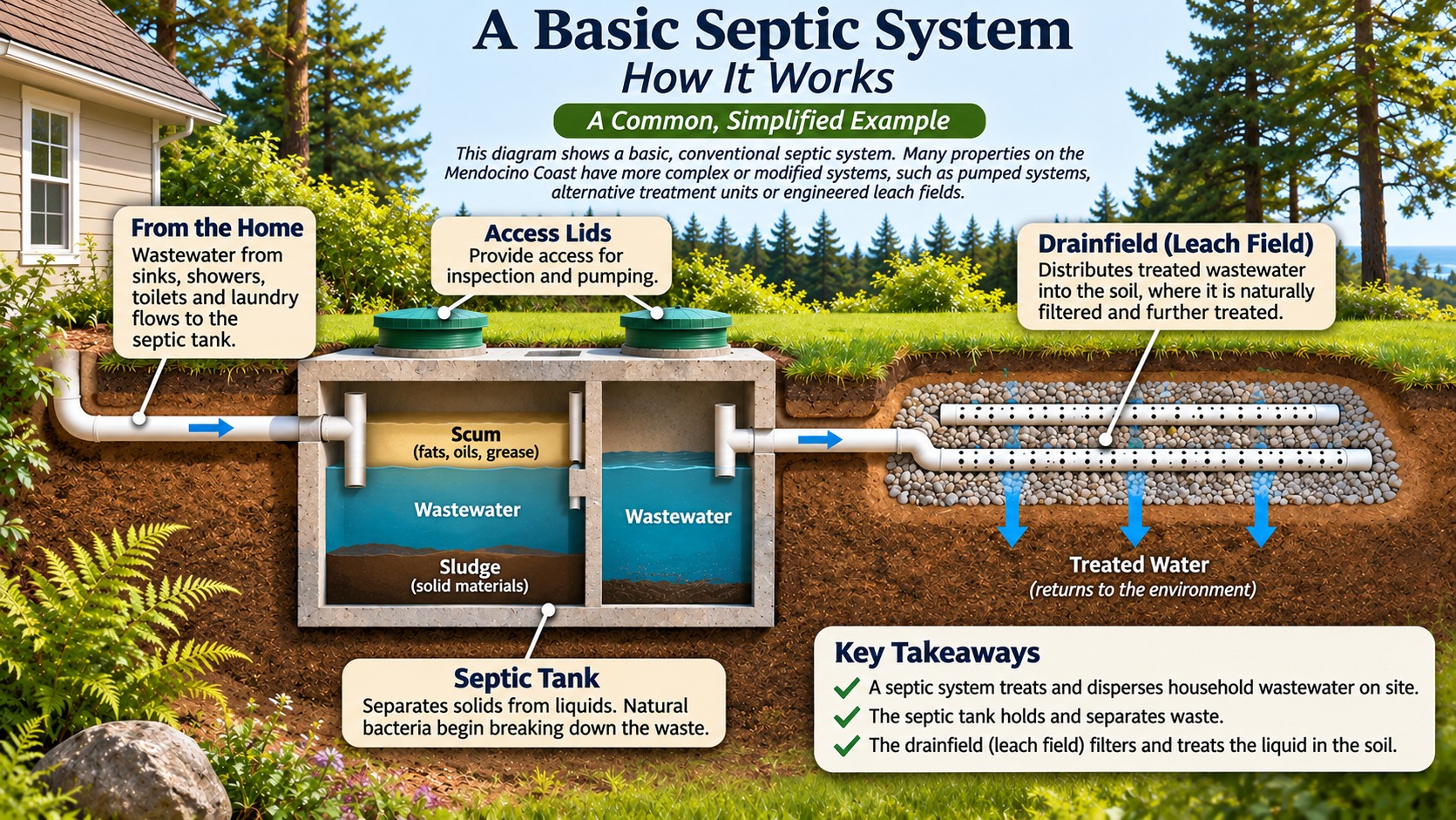
A Basic Septic System Infographic showing the various components and how what they do.
The drainfield, also commonly called a leach field, is where liquid wastewater from the septic tank is distributed and gradually absorbed and treated by the soil. It is an important and potentially expensive component of the septic system.
As part of the inspection, a septic professional may perform a flow test. This involves introducing a measured amount of water into the system and observing how well the drainfield accepts it. The purpose is to help determine whether the system can handle a reasonable amount of household wastewater without backing up or surfacing.
The inspector will also look for unusually wet ground, standing water, sewage odors and other signs that the leach field may not be functioning properly.
While a successful flow test is encouraging, it does not guarantee the future performance of the system. Seasonal groundwater levels, saturated soil during the rainy season and changes in household water usage can all affect how well a leach field performs.
Pumps and Alarms
If the property has a pumped septic system, additional components should be evaluated, including:
- The pump chamber
- The pump and float switches
- Electrical connections and controls
- The high-water alarm
These components require periodic maintenance and may eventually need replacement.
Review the Available Records
It is also helpful to obtain any available septic permits, system drawings, previous inspection reports and maintenance records.
These can help establish:
- The age and type of system
- The location of the tank and leach field
- The number of bedrooms the system was designed to serve
- The location of any designated replacement leach field area
- Previous repairs or modifications
Some older Mendocino Coast properties may have limited records available.
Know What You Are Buying
A septic system should not discourage someone from purchasing a home. Private septic systems are a normal part of property ownership throughout much of the Mendocino Coast.
Understanding the type, condition and maintenance needs of the system before purchasing can help buyers avoid unexpected expenses and become more confident property owners.
Next in the series: Septic Tank Maintenance: What Homeowners Should Know.
This article provides general information. Inspection procedures and septic system requirements vary by property and system design. Buyers should consult a qualified septic professional regarding the condition of a particular system.


